Bihar's Stunning Shift: From 2020 Deadlock to 2025 Landslide - What Changed?
In Bihar's 2025 elections, NDA gained significant support, increasing its vote share to 46.6%, while MGB's share remained stable at 37.9%. | India News
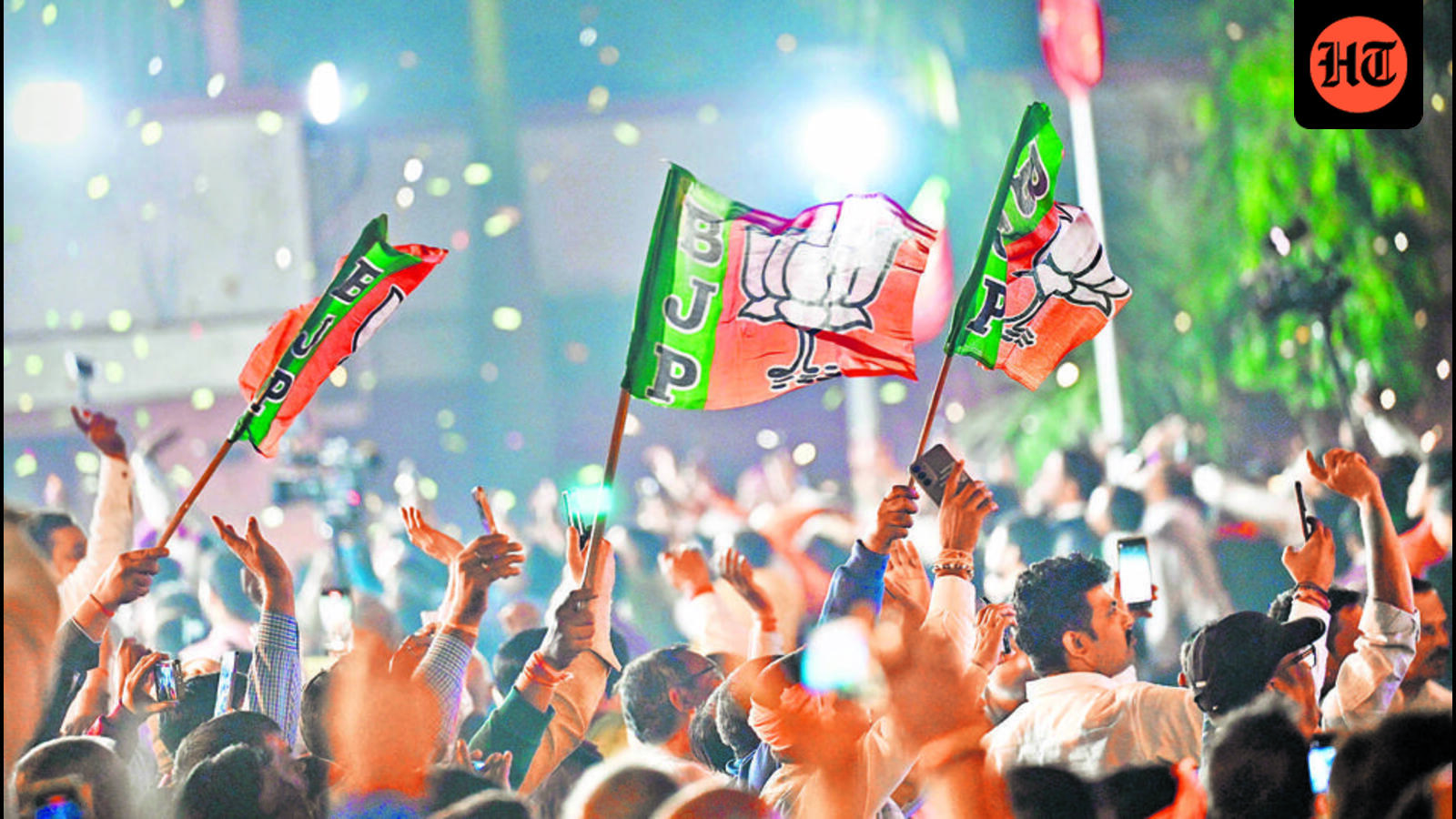
Bihar's 2020 assembly elections were a nail-biter, with both major alliances, the National Democratic Alliance (NDA) and the Mahagathbandhan (MGB), securing almost equal vote shares. However, the 2025 elections saw a dramatic shift, with the NDA securing a 10 percentage point lead in vote share and a staggering 68.7 percentage point lead in seat share.
The NDA's significant increase in vote share can be attributed to a 9 percentage point boost from its two main constituents, the Bharatiya Janata Party (BJP) and the Janata Dal (United) (JD(U)). The JD(U) saw a substantial increase in its vote share, largely due to the return of the Lok Janshakti Party (LJP) to the NDA fold.
The NDA's higher vote share led to a higher winning threshold in Bihar, making it increasingly difficult for MGB candidates to secure wins. In fact, 71.4% of MGB's winning candidates polled a lower median vote share than the average winning candidate.
The decline in spoilers, which played a significant role in MGB victories in 2020, also contributed to the NDA's landslide win. In 2025, there were only 23 seats where the party finishing third had a vote share greater than the victory margin, compared to 65 in 2020.
The JD(U) saw a significant improvement in its performance, particularly in direct contests with the Rashtriya Janata Dal (RJD). In 61 seats where only these two parties contested, the JD(U) won 50 contests, compared to the RJD's 40 in 2020.
The dramatic shift in Bihar's electoral landscape can be attributed to a combination of factors, including the NDA's improved performance, the decline in spoilers, and the JD(U)'s resurgence against the RJD.