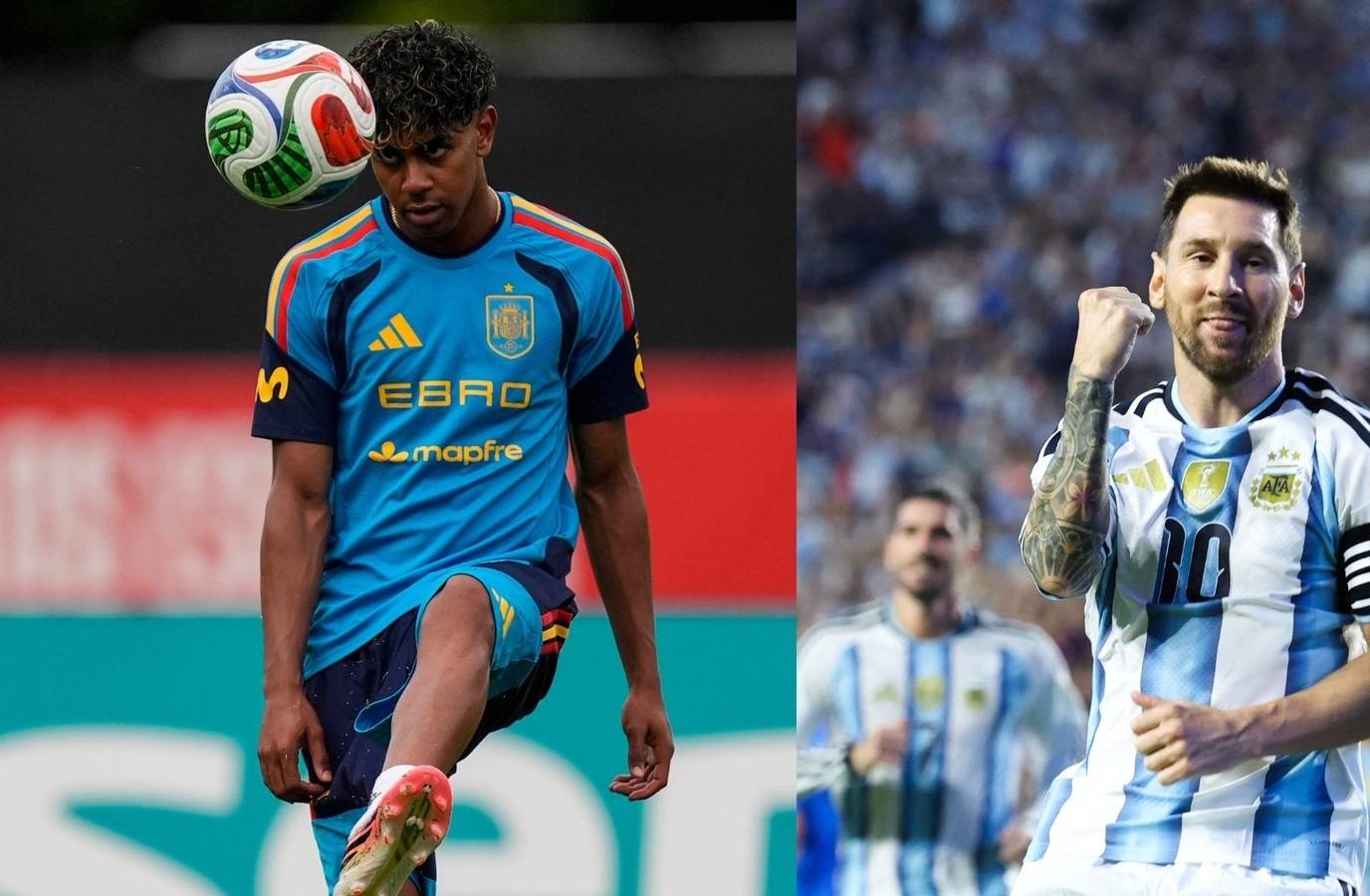
The 2026 FIFA World Cup is set to be the biggest and most competitive tournament in history, with 48 teams, 104 matches, and 1,248 players spread across Canada, Mexico, and the United States. One of the most striking features of this edition is the unprecedented age divide among the players.
At one end of the spectrum, eight players aged 40 or above have been selected, more than every previous World Cup combined. Cristiano Ronaldo, 41, and Lionel Messi, 38, are among the veterans who will be making their sixth World Cup appearance.
On the other hand, the teenage class is also well-represented, with players like Mexico's Gilberto Mora, Spain's Lamine Yamal, Brazil's Endrick, and Ecuador's Kendry Paez, who will be just 17, 19, 19, and 18 years old, respectively, when the tournament kicks off.
The age divide is not just a matter of old against young; it's also a reflection of the changing nature of football. The expanded format of the World Cup rewards teams that have depth, role clarity, and problem-solving abilities, rather than just relying on the best starting eleven.
The old are not just surviving because they can still do everything; they're surviving because they can still do something rare, like providing experience and leadership. The young, on the other hand, are not just arriving because they're complete; they're arriving because they offer something fresh and impossible to fully prepare for.
The player caught in the squeeze is the ordinary peak-age footballer, who is no longer enough to make it in the modern game. The old are still useful because they can provide control, protection, and memory, while the young can provide disruption, velocity, and shock.
The 2026 age profile reveals how managers have begun to think about international squads, assembling a toolbox rather than just building a team. The most valuable tools may come from football's two extremes: the old who have learned how to last, and the young who have learned how to arrive before their time.