
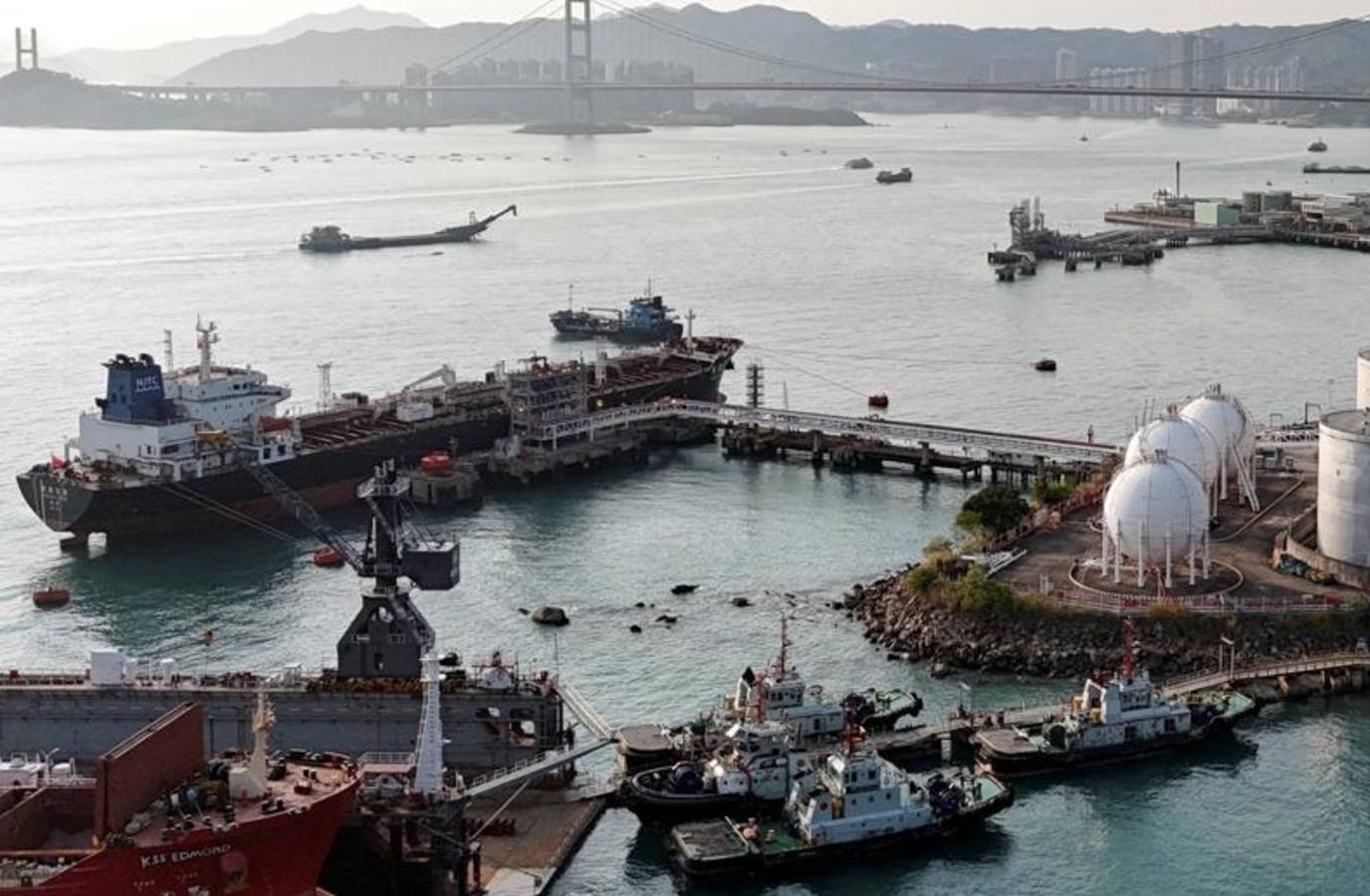
A sharp fall in China's crude oil imports during the Iran war has been instrumental in holding down oil prices and keeping the global economy humming.
Chinese people are driving fewer gasoline-powered cars and taking trains instead of planes, while the country is dialing back operations at the plants that turn crude oil into feedstock for materials such as plastics.
Beijing is beginning to draw down reserves, and the question is how long the import cuts can last—and what would happen if China needs to start buying more again.
Actions by the world's biggest oil producer—the U.S.—and its biggest importer—China—help explain this unexpected resilience.
The U.S. increased crude oil exports in April and May to more than five million barrels a day, a jump from an average of about four million barrels a day in recent years.
And China has cut its imports, with Chinese official customs data putting crude imports at 7.8 million barrels a day in May, a drop from around 11 million barrels a day in recent years.
Just as remarkable as the abrupt import fall is the absence of major visible disruptions to everyday life in China.
Tourists are still traveling, factories are still running and store shelves have plenty of toilet paper.